Curriculum

In early 2000, national organizations representing PAs, including the National Commission on Certification of Physician Assistants (NCCPA), the Accreditation Review Commission on Education for the Physician Assistant (ARC-PA), the American Academy of Physician Assistants (AAPA), and the Physician Assistant Education Association (PAEA), worked to develop a set of overarching competencies for PAs and the PA professions, simply known as Competencies for the Physician Assistant Profession.

As noted in the Competencies document, some of the competencies are acquired during the PA education process, while others are developed and honed throughout a PA’s career.

As such, our Master of Medical Science (MMSc) PA program has adapted the competencies into specific measurable outcomes, each falling within the general heading of the original competencies (e.g., medical knowledge), but reduced to a specific and measurable performance item that best reflects the goals of the program as follows:

Graduate Competencies

Medical Knowledge

PAs must demonstrate core knowledge about established and evolving biomedical and clinical sciences and the application of this knowledge to patient care. In addition, PAs are expected to demonstrate an investigatory and analytic thinking approach to clinical situations. 

Outcome expectations for this competency include:

  • MK: Demonstrate the ability to effectively recognize, assess, diagnose, and treat patients across the lifespan with a variety of problems to include preventive, emergent, acute, and chronic clinical practice of medicine. 

Interpersonal and Communication Skills

PAs must demonstrate interpersonal and communication skills that result in effective information exchange with patients, families, physicians, members of the healthcare team, and the healthcare system. 

Outcome expectations for this competency include:

  • ICS1: Demonstrate knowledge and application of effective interpersonal, oral and written communication skills necessary to elicit and record a medical history, explain and document diagnostic studies, and present an appropriate treatment plan. 
  • ICS2: Communicate in a patient-centered and culturally responsive manner to accurately obtain, interpret, and utilize information and implement a patient-centered management plan.

Patient Care and Clinical Problem Solving

PAs must demonstrate care that is effective, safe, high quality, and equitable; includes patient- and discipline-specific assessment, evaluation, and management. 

Outcome expectations for this competency include:

  • PC1: Demonstrate the ability to perform a new or routine follow up physical exam.
  • PC2: Demonstrate the ability to effectively work within a patient centered healthcare team.
  • PC3: Demonstrate the ability to apply an evidence-based approach to the evaluation and management of patients.

Technical Skills

PAs must demonstrate the ability to obtain informed consent, perform clinical procedures common to primary care, and interpret diagnostic tests.

Outcome expectations for this competency include:

  • TS: Demonstrate skills including but not limited to: venipuncture, intravenous access, injections, wound care, casting and splinting, and interpretation of radiographic images, laboratory studies, and ECGs.

Professionalism

Professionalism involves prioritizing the interests of those being served above one’s own while acknowledging their professional and personal limitations. Additionally, PAs must demonstrate a high level of responsibility, ethical practice, sensitivity to a diverse patient population, and adherence to legal and regulatory requirements.

Outcome expectations for this competency include:

  • P1: Demonstrate professionalism in interactions with others including, but not limited to, patients, families, and colleagues.
  • P2: Demonstrate knowledge and application of an understanding of the PA role including ethical and professional standards regarding the PA profession.
  • P3: Demonstrate knowledge and application of intellectual honesty, academic integrity, and professional conduct throughout the program.

Competency and proficiency in these functions and tasks is a learning process that will gradually occur over the breadth of the MMSc PA Program at George Fox University. Evaluation of these competencies will occur via the use of multiple instruments, including written and practical examinations, simulation, and skills-based testing.

Curriculum Concept

The Master of Medical Science (MMSc) PA program curriculum occurs over six consecutive semesters (24 months), covering 112 graduate semester hours. The program has three phases which include:

  • Didactic (also known as pre-clinical)
  • Clinical (also known as experiential)
  • Summative

The 12-month (three semester) didactic (pre-clinical) phase is conducted on campus and prepares the student for the experiential hands-on portion of training.  The clinical (experiential) phase is 11 months long (three semesters) and is conducted at hospitals and clinics where students are exposed to supervised clinical experiences.  The 1-month summative phase evaluates student attainment of graduate competencies and occurs during the last month of the program.

The MMSc PA program at George Fox is a professional degree program intended to prepare students academically and professionally for responsibilities and services as a PA. Due to the sequential nature of the didactic curriculum, students must successfully pass all didactic courses for a given semester before becoming eligible to take courses in the subsequent semester.

Advanced placement will not be granted under any circumstances. All students who are granted admission to the program must fulfill all program requirements. Clerkship rotations are designed to provide medical experience and patient exposure and are referred to as Supervised Clinical Practice Experiences (SCPE). These experiences form the basis of the clinical and socialization processes for adaptation to the roles and functions of a PA.

The overall design is based on three areas of input. These are:

  • George Fox MMSc PA Graduate Competencies and Outcomes
  • ARC-PA Standards
  • NCCPA Blueprint guidelines

The university and program mission were also integral in the curriculum design. Next, course learning goals, course learning outcomes, and course instructional objectives are linked to each other and the program foundation. Each course is built using this guide.

Assessment of the curriculum is both described in the syllabus and in the Student Handbook and applied based on clear parallels between what is expected, taught and assessed.

Instructional Delivery Methods

Instruction methods will focus on program and course competencies and include a didactic, experiential and summative phases. The didactic phase of the program will consist of lectures, laboratory sessions, workshops, and problem-based learning case studies (PBL).

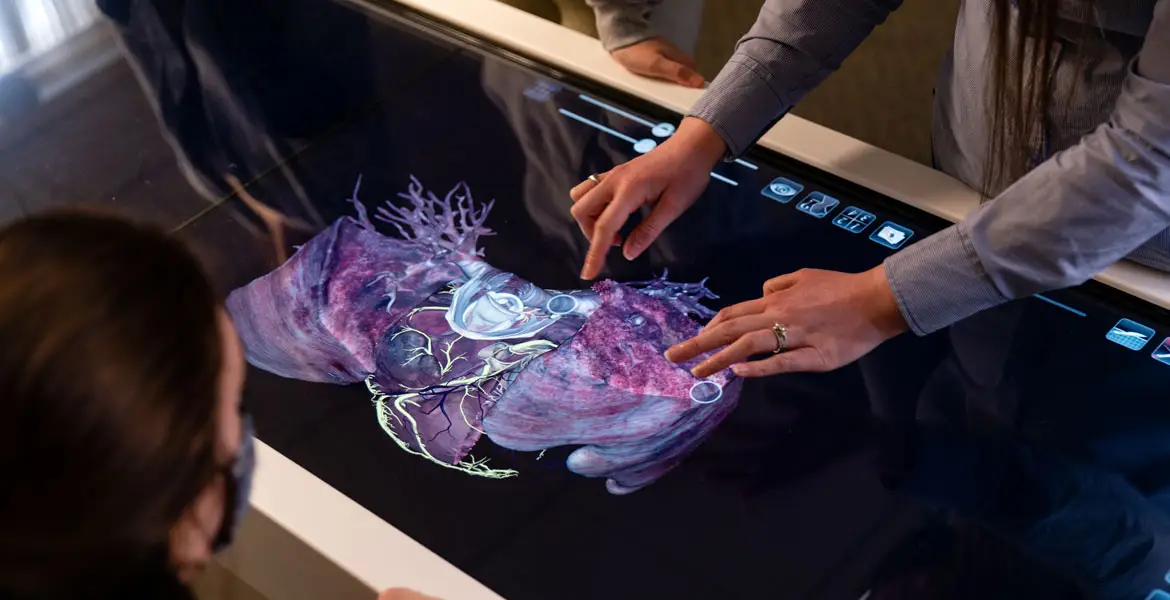
Lectures and laboratory sessions will be accomplished as a class. Laboratory and workshop coursework will allow students hands-on experience in skills such as physical exams, suturing, and radiograph and electrocardiograph interpretation. Problem-based learning activities will take place in small groups (six to nine students with one faculty) where teams discuss solutions to a presented problem. 

The clinical phase of the program will take students from the theoretical classroom to an active learning environment that prepares them for a lifetime of continued skill refinement and expanded knowledge as a practicing PA. During this phase preceptors oversee students while they gain experience as a medical provider in a myriad of settings such as family medicine, internal medicine, emergency medicine, surgery, pediatrics, prenatal and gynecology, behavior and mental health, and others. 

Finally, the summative phase will test graduate competency attainment via a written test, objective structured clinical examinations (OSCEs), and skills testing.

All PA program courses in the didactic and summative phase are in person except for the pharmacology course series (Introduction to Pharmacotherapy and Pharmacotherapy and Patient Management I, II, and III), which is asynchronous/remote. All experiences in the clinical phase are in person with occasional remote (tele-health) patient visits. 

Library support for the program can be viewed here. In addition, the program uses DxR Clinician as part of its problem-based education. DxR Clinician can be seen here.

Master of Medical Science Requirements

Spring IA (4 credit hours)
This course is designed to introduce students to the physician assistant profession alongside the healthcare systems and policies influencing medical practice. It includes an overview of PA history, licensure, and interprofessional roles, as well as essential aspects of public health, patient safety, healthcare delivery systems, and reimbursement structures. The course also develops skills in professionalism, advocacy, and quality improvement relevant to the evolving responsibilities of the PA.
This course covers intellectual Honesty and Appropriate Academic Professional Conduct and Medical Ethics.
This course provides an overview of anatomy, physiology, and genetic and molecular mechanisms of health and disease. In addition, the course will include core knowledge about established and evolving biomedical and clinical sciences and the application of this knowledge to patient care.
This foundational course introduces students to essential clinical reasoning, interpersonal communication, research literacy, and physical examination skills through a problem-based learning (PBL) format. Students will develop and integrate evidence-based medicine (EBM), counseling and patient education techniques, and basic physical exam competencies. Emphasis is placed on clinical application through PBL case discussions, allowing learners to synthesize content from multiple domains while developing skills in collaboration, documentation, and patient-centered care. Active learning is facilitated through journal club, role-play, peer feedback, and lab-based physical exam training. The course culminates in a formative, integrated PBL case experience, enabling students to practice skills across all domains in a simulated clinical setting.
This course provides an introduction to pharmacotherapy.  In addition, the course will cover acute and longitudinal - pharmaceutical and non-pharmaceutical - patient management that is patient centered and inclusive while addressing medical issues, patient education and patient safety.
Spring IB (19 credit hours)
This course covers mental health conditions to include the pathophysiology, neurophysiology, evaluation, diagnosis, detection, and treatment of each.  Topics covered include, but are not limited to, abuse and neglect, anxiety disorders, mood disorders, conduct disorders, dissociative disorders, eating disorders, obsessive compulsive disorders, attention deficit, autism, personality disorders, schizophrenia, sleep-wake disorders, somatic symptoms, and trauma-related disorders. In addition, detection and treatment of (1) substance abuse, (2) human sexuality, (3) issues of death, dying and loss, (4) response to illness, injury and stress, (5) principles of violence identification and prevention, and (6) a few additional key psychiatric/behavioral conditions will be covered.
This course provides an overview of anatomy, physiology, and genetic molecular mechanisms of health and disease as they relate to body system diseases and topics covered in this term.
This course provides a review of organ system topics covered in the Clinical Reasoning and Problem Based Learning and Clinical Reasoning and Problem Based Learning Lab series of courses.  In addition, this course will cover topics that are not part of the problem-based learning modules and unique issues seen in special populations (primarily pediatrics and geriatrics). In all instances, the pathophysiology series looks at the disease process and helps to answer the “why” diseases present the way they do by understanding how diseases alter normal physiology.
This course is designed to provide the link between pharmacology, clinical practice, and prescribing medications. This course sequence will present the pharmacology, pharmacokinetics, side effects, complications, dosages, contraindications, clinical pearls, and patient education for medications related to body systems and diseases covered this term.
This course is designed to build foundational skills in clinical problem-solving, diagnostic interpretation, and procedural competence through a case-based learning model. Utilizing a problem-based learning (PBL) format, students will engage in the analysis of comprehensive clinical scenarios that foster advanced reasoning, differential diagnosis development, and application of evidence-based decision-making. Laboratory sessions will complement the PBL curriculum by providing hands-on instruction in procedural techniques, physical examination maneuvers, and patient-centered communication. These sessions include formative assessments, oral presentation practice, and documentation exercises aimed at preparing students for the clinical environment. Students will develop skills in (1) interviewing and eliciting a medical history; (2) performing complete and focused physical examinations; (3) generating differential diagnoses; and (4) ordering and interpreting diagnostic studies. Patient management instruction will help students develop treatment plans that are (1) patient-centered, (2) inclusive, (3) addressing medical issues, and (4) provide patient education and referral. Instruction will help students develop basic counseling and patient education skills that are (1) patient-centered, (2) culturally sensitive and focused on helping patients cope with illness, injury, and stress, (3) adhere to prescribed treatment plans, and (4) designed to modify patient behaviors to more healthful patterns. The course covers medical care across the life span in prevention, emergent, acute, chronic, and rehabilitative care. In most instances, all age groups are addressed (prenatal, infant, children, adolescents, adult, and elderly).
This course prepares students to provide medical care to patients from diverse populations both domestically and internationally.  It seeks to increase awareness of health disparities and inequities domestically and globally across diverse patient populations and highlight the impact of social determinants of health on individual and population health and wellbeing.  Instruction related to medical care and diversity prepares students to (1) evaluate their own values and avoid stereotyping, (2) become aware of differing health beliefs, values and expectations of patients and other health care professionals and how it impacts (a) communication, (b) decision-making, (c) compliance and (d) health outcomes.
Summer I (20 credit hours)
This course provides an overview of anatomy, physiology, and genetic and molecular mechanisms of health and disease as they relate to body system diseases and topics covered in this term.
This course provides a review of organ system topics covered in the Clinical Reasoning and Problem Based Learning and Clinical Reasoning and Problem Based Learning Lab series of courses.  In addition, this course will cover topics that are not part of the problem-based learning modules and unique issues seen in special populations (primarily pediatrics and geriatrics). In all instances, the pathophysiology series looks at the disease process and helps to answer the “why” diseases present the way they do by understanding how diseases alter normal physiology.
This course is designed to provide the link between pharmacology, clinical practice, and prescribing medications. This course sequence will present the pharmacology, pharmacokinetics, side effects, complications, dosages, contraindications, clinical pearls, and patient education for medications related to body systems and diseases covered this term.
This course is designed to build foundational skills in clinical problem-solving, diagnostic interpretation, and procedural competence through a case-based learning model. Utilizing a problem-based learning (PBL) format, students will engage in the analysis of comprehensive clinical scenarios that foster advanced reasoning, differential diagnosis development, and application of evidence-based decision-making. Laboratory sessions will complement the PBL curriculum by providing hands-on instruction in procedural techniques, physical examination maneuvers, and patient-centered communication. These sessions include formative assessments, oral presentation practice, and documentation exercises aimed at preparing students for the clinical environment. Students will develop skills in (1) interviewing and eliciting a medical history; (2) performing complete and focused physical examinations; (3) generating differential diagnoses; and (4) ordering and interpreting diagnostic studies. Patient management instruction will help students develop treatment plans that are (1) patient-centered, (2) inclusive, (3) addressing medical issues, and (4) provide patient education and referral. Instruction will help students develop basic counseling and patient education skills that are (1) patient-centered, (2) culturally sensitive and focused on helping patients cope with illness, injury, and stress, (3) adhere to prescribed treatment plans, and (4) designed to modify patient behaviors to more healthful patterns. The course covers medical care across the life span in prevention, emergent, acute, chronic, and rehabilitative care. In most instances, all age groups are addressed (prenatal, infant, children, adolescents, adult, and elderly).
This course provides instruction in medical topics for pediatric, adult and geriatric populations, including preventive care across the lifespan and nutrition and obesity counseling.  It also provides an introduction to cultural nutrition and alternative therapies to meet the needs of a diverse patient population.
Fall I (20 credit hours)
This course provides an overview of anatomy, physiology, and genetic and molecular mechanisms of health and disease as they relate to body system diseases and topics covered this term.
This course provides a review of organ system topics covered in the Clinical Reasoning and Problem Based Learning and Clinical Reasoning and Problem Based Learning Lab series of courses.  In addition, this course will cover topics that are not part of the problem-based learning modules and unique issues seen in special populations (primarily pediatrics and geriatrics). In all instances, the pathophysiology series looks at the disease process and helps to answer the “why” diseases present the way they do by understanding how diseases alter normal physiology.
This course is designed to provide the link between pharmacology, clinical practice, and prescribing medications. This course sequence will present the pharmacology, pharmacokinetics, side effects, complications, dosages, contraindications, clinical pearls, and patient education for medications related to body systems and diseases covered this term.
This course is designed to build foundational skills in clinical problem-solving, diagnostic interpretation, and procedural competence through a case-based learning model. Utilizing a problem-based learning (PBL) format, students will engage in the analysis of comprehensive clinical scenarios that foster advanced reasoning, differential diagnosis development, and application of evidence-based decision-making. Laboratory sessions will complement the PBL curriculum by providing hands-on instruction in procedural techniques, physical examination maneuvers, and patient-centered communication. These sessions include formative assessments, oral presentation practice, and documentation exercises aimed at preparing students for the clinical environment. Students will develop skills in (1) interviewing and eliciting a medical history; (2) performing complete and focused physical examinations; (3) generating differential diagnoses; and (4) ordering and interpreting diagnostic studies. Patient management instruction will help students develop treatment plans that are (1) patient-centered, (2) inclusive, (3) addressing medical issues, and (4) provide patient education and referral. Instruction will help students develop basic counseling and patient education skills that are (1) patient-centered, (2) culturally sensitive and focused on helping patients cope with illness, injury, and stress, (3) adhere to prescribed treatment plans, and (4) designed to modify patient behaviors to more healthful patterns. The course covers medical care across the life span in prevention, emergent, acute, chronic, and rehabilitative care. In most instances, all age groups are addressed (prenatal, infant, children, adolescents, adult, and elderly).
This course is focused on developing organization, communication and leadership traits. Instruction will look at how individuals and groups think, communicate and interact and analyze what factors enhance these interactions to positively impact the success of the organization, patient-provider relationship, and patient-centered healthcare teams. The purpose of this course is to create a more effective service-oriented clinician. The course will examine some of the primary theories and principles of motivation, communication, leadership attributes, managing conflict, decision making, team building, and quality improvement.   It will provide examples of how greater knowledge and understanding of effective leadership skills is vital to successful and sound decision-making, problem solving, conflict management, team building, and managing change to improve healthcare teams, organizations, and patient care.
Spring IIA (8 credit hours)
This course covers concepts of surgical assessment, basic surgical skills and procedures, surgical complications, and management of surgical patients. It builds on the foundation of the previous medicine courses and expands on etiology, pathophysiology, clinical manifestation, and diagnosis, and appropriate management of selected surgical conditions including care of acute and chronic patients. Emphasis is on students developing competency in the principles and practices involved in aseptic and basic surgical techniques, surgical risk assessment, wound closure, wound management, anesthesia, and preoperative, intraoperative and postoperative evaluation and management.
This course prepares students to recognize, rapidly assess, and effectively manage emergent situations, illness, or injury. Problem-based case studies and team-based activities are used to encourage the development of teamwork, collaboration, and interdisciplinary value. Basic Life Support (BLS) and Advanced Cardiac Life Support (ACLS) are part of this course.
This course is designed to (1) prepare the student for entering clinical rotations, (2) discuss SCPE expectations and behavior, and (3) promote interprofessional relationships.
Spring IIB (12 credit hours)
Summer II (12 credit hours)
Fall IIA (16 credit hours)
Fall IIB (1 credit hour)
The summative phase measures mastery in the GFU MMSc PA graduate competencies and outcomes, associated ARC-PA Standards, and NCCPA Blueprint items. The evaluation will consider each Graduate Competency category below: 1. Medical knowledge (MK) 2. Interpersonal and communication skills (ICS) 3. Patient care and clinical problem solving (PC) 4. Technical skills (TS) 5. Professionalism (P) This phase is 1 month in duration and represents the final stage of the program and includes the following ‘summative’ evaluations: - Written examination covering the knowledge base content associated with all the basic medical and clinical sciences and its application to the practice of medicine (testing aptitude of competency and outcomes relevant to [1] Medical Knowledge and [3] Patient Care and Clinical Problem Solving. - Objective Structured Clinical Examination (OSCE), which is used to evaluate direct patient care skills including obtaining the medical history, physical examination skills, communication, and professionalism - testing aptitude of competency and outcomes relevant to [1] Medical Knowledge, [2] Interpersonal and Communication Skills, [3] Patient Care and Clinical Problem Solving, and [5] Professionalism. - Skill Specific Testing, which is used to assess the student’s ability to perform and/or interpret the diagnostic and therapeutic skills - testing aptitude of competency and outcomes are relevant to [1] Medical Knowledge, [2] Interpersonal and Communication Skills, [3] Patient Care and Clinical Problem Solving, [4] Technical Skills, and [5] Professionalism. Additional instruction will include: - A review of patient safety, quality improvement, prevention of medical errors, and risk management - Instruction about PA licensure, credentialing, and laws and regulations of professional practice - In addition, the program curriculum will include instruction in the PA profession and current trends to include: - Physician-PA team relationship - Political issues that affect PA practice - PA professional organizations Finally, students will also engage in preparation for the PANCE exam, Curriculum Vitae creation, and preparation for job interviews.

Questions?

Tabitha Hall

Tabitha Hall

Admissions Counselor, PA Program