
Graphic Design Class Partners With Portland Rescue Mission To Bring Dignity to Food Outreach
by Sean Patterson
By creating packaging for Portland Rescue Mission’s food service provider, professor Marvin Eans and his students are using their graphic design skills as a vehicle of compassion
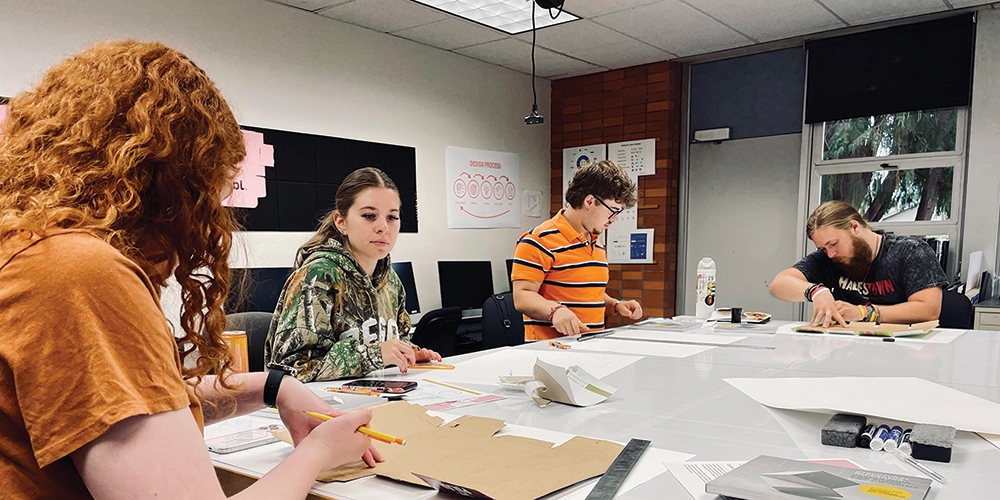
Marvin Eans views creativity as a “divine language” – one that communicates truth, hope and restoration – and graphic design as a form of ministry. It’s with that mindset he teaches Print Packaging and Design, a course where students use their skills to, as Eans puts it, “bring dignity and hope to communities through visual storytelling.”
Now, through a partnership with Fresh Start Catering, the food distribution wing of the Portland Rescue Mission, his class is putting those words to flesh by creating custom packaging for the charity.
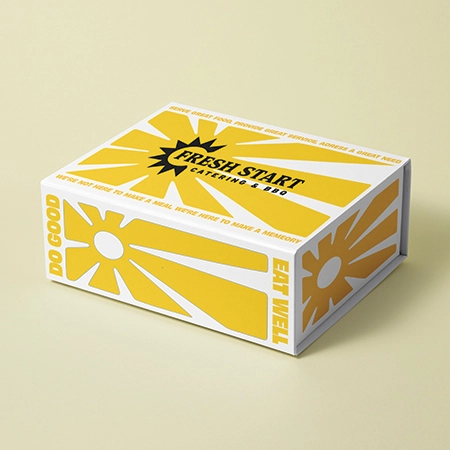
The challenge for students is to design branding, packaging and messaging that reflect Fresh Start’s mission to “eat well, do good.” Ten students developed concepts, and three finalists advanced to refine their designs before the final selection. The chosen design debuted in November, just prior to Thanksgiving.
For Eans, it’s the latest classroom project that reflects his philosophy that design can be a vehicle for compassion, dignity and social change.
“It’s powerful to watch them connect their artistic skills with a deeper sense of purpose and social responsibility,” says Eans, an assistant professor of art and design. “Our goal is to create lasting relationships where students can continue contributing to real-world impact while developing their professional portfolios.”
The experience reinforces the ethos of the university’s graphic design program, which emphasizes the integration of faith and design. “We don’t just teach students how to create, but why they create,” Eans says.
While other universities may offer community projects, our approach is rooted in spiritual formation, empathy, and purposeful design that is Christ-centered.”
Supported by a micro-grant from the university’s Program for Leadership & Formation, Eans’ projects incorporate the university’s call to engage the head, heart and hands in cultivating the whole person – uniting academic rigor, spiritual formation, and service. His vision is to make service-integrated design a defining feature of the program, preparing students to bring their faith into every creative endeavor – a goal reflected in current partnerships with organizations that include Habitat for Humanity, Love INC, and the Philadelphia Dream Center.
Ultimately, Eans hopes these collaborations inspire students to see design as a tool for ministry – one that tells stories of redemption, meets real needs, and reflects Christ’s love through creativity.

Related Posts
A Community of Art: The Process of a Mural
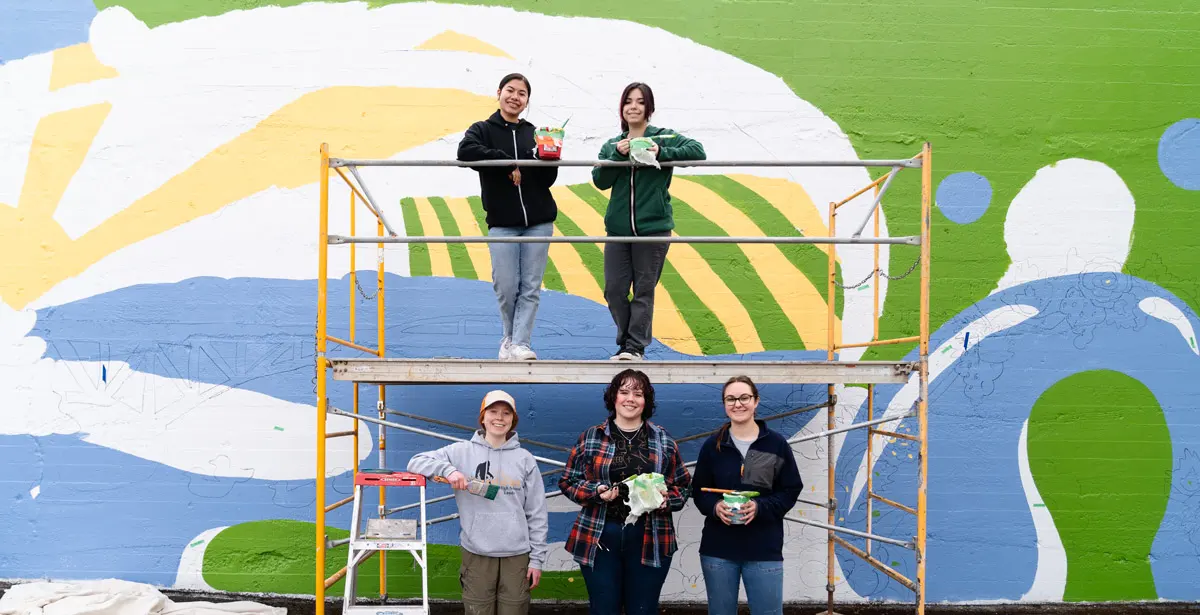
During the spring, several art students, under the guidance of Professor Seth Van der Eems, worked together on a new mural for the community. We asked the contributors to reflect on the unique process.
Nathan Higa: Restoring Inner Peace
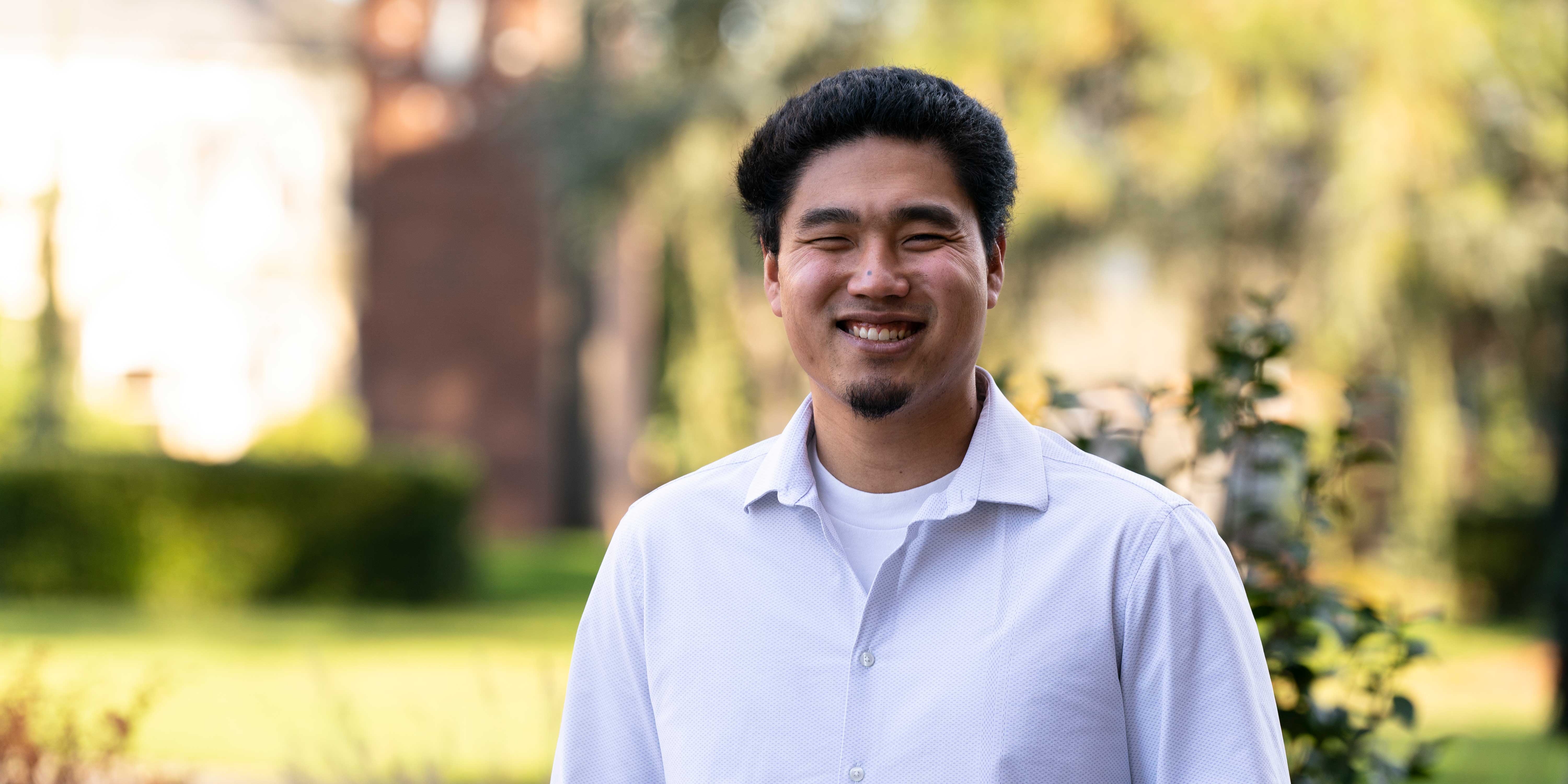
When I met with Nathan Higa at a coffee shop in downtown Newberg, I was greeted with a wide smile and a calming presence. He was incredibly easy to talk to, and I could immediately tell why he was called to complete his doctorate in clinical psychology (PsyD).
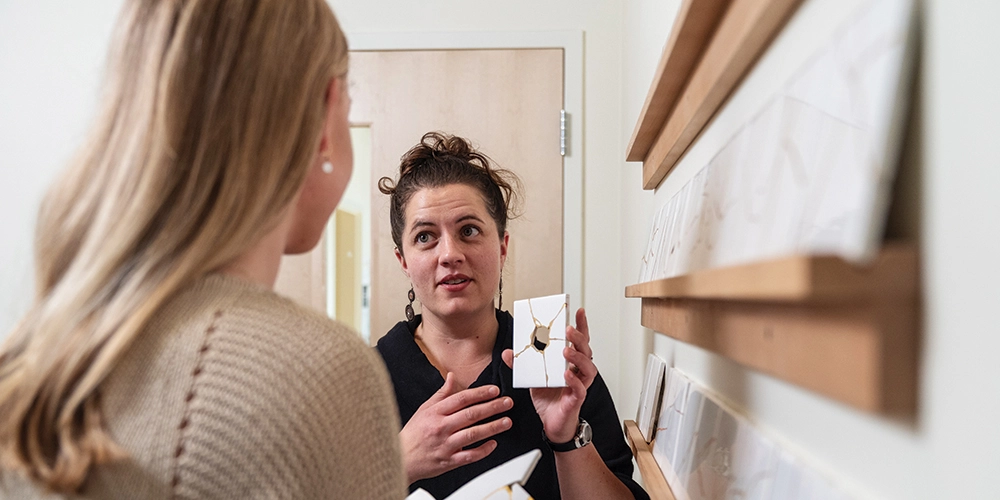
Japanese Art of Mending With Gold Becomes a Spiritual Exercise for Ceramics Students
Professor Tiffany Hokanson incorporated a kintsugi section into her fall ceramics courses, teaching students to see brokenness as part of the redemptive process

What's On-Campus Work Like?
Working while being a full-time student may seem impossible. Somedays it feels like you have the extra time to work, other days not so much. If you find you need to work while going to school, consider first working an on-campus job.
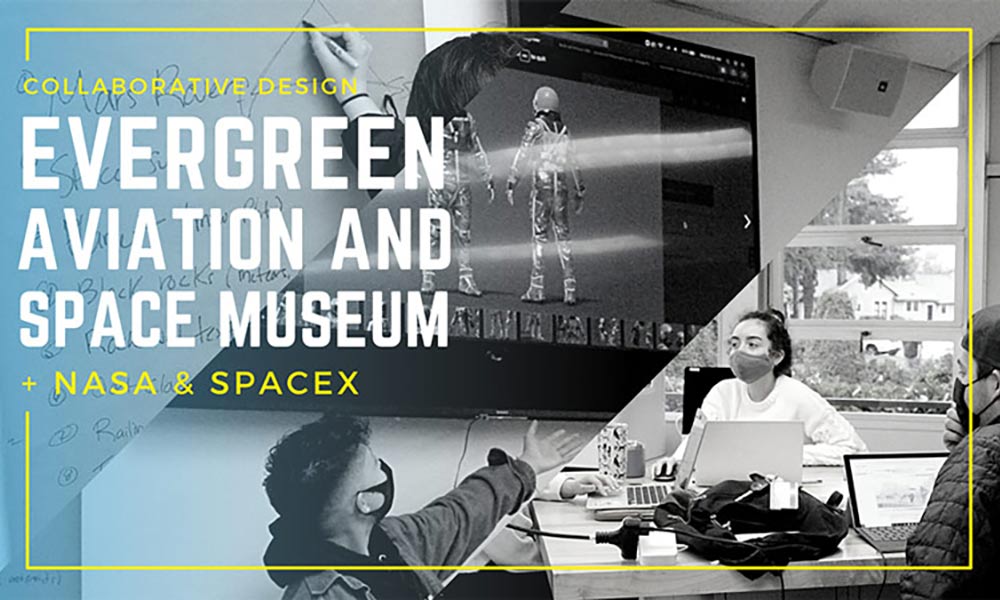
Collaborative Design Takes on Aviation
Gone are the days when we can say there are no careers in art, and George Fox's Collaborative Design class proves this to be true as they submit designs for renovation and modernization of the Evergreen Aviation Museum to NASA for funding.
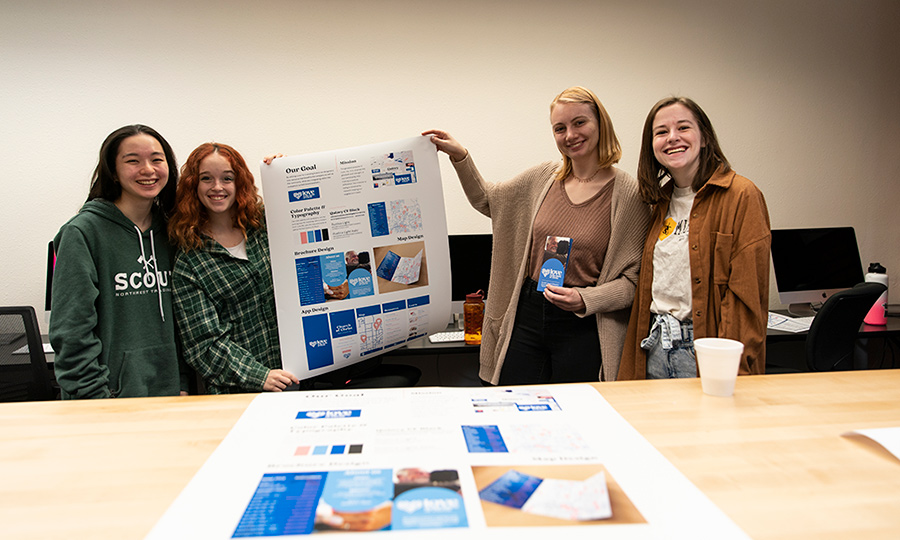
Graphic Design Program: Preparing Students Through Real-World Connections
As part of George Fox's commitment to providing a Christian education that equips students to thrive in today’s world, the university’s art and design program is taking career prep beyond textbooks, offering students real-world experiences and professional development through industry connections.